Where can you see dolphins in Martinique?
The waters of Martinique are full of dolphins, especially along the Caribbean coast, where the sea is calmer. Several spots are particularly favorable for observing them:
The Dominica Channel: Located off the northwest coast, between Martinique and Dominica, this marine corridor is a true highway for cetaceans. Dolphins are frequently seen here in groups of several dozen individuals. Fort-de-France Bay: Heading offshore, you may spot dolphins swimming peacefully or playing in the waves created by boats. The areas around Case-Pilote and Bellefontaine: This zone is one of the best spots to observe these marine mammals, as they are present in large numbers and are often curious about visitors. Off the coast of Anses-d’Arlet: Sometimes, when heading toward the coves of Anse Dufour or Anse Noire, you may encounter dolphins moving in small groups.
The chances of seeing them are high, especially if you go out to sea with experienced guides who know their habits and the areas where they roam.
What species of dolphins can be seen in Martinique?
Several species of dolphins inhabit Martinique’s waters, including:
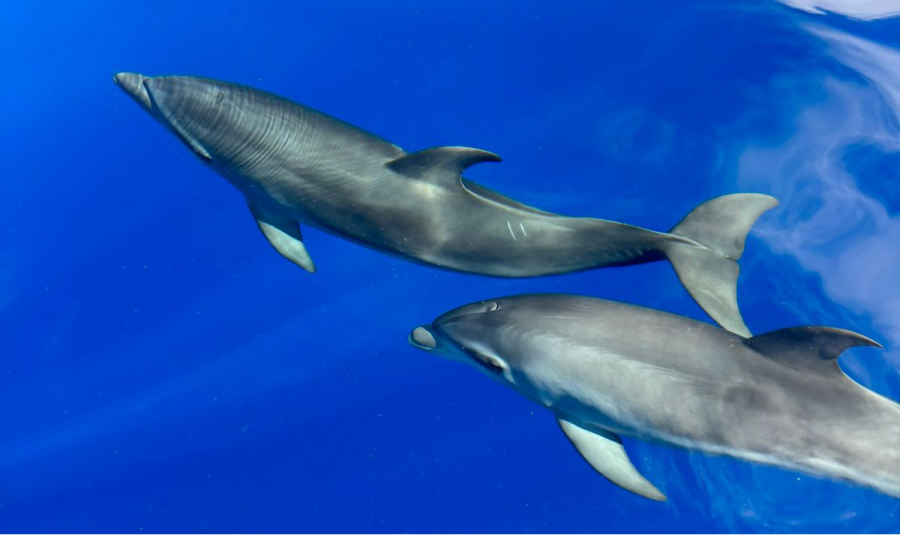
The Atlantic spotted dolphin (Stenella frontalis): Recognizable by its spotted body, which becomes more pronounced with age. Very playful, it often swims near boats. The bottlenose dolphin (Tursiops truncatus): The most well-known species, often featured in films and documentaries. Its intelligence and curiosity make it a frequent companion on sea trips. The spinner dolphin (Stenella longirostris): Smaller and more discreet, it lives in large groups and is known for its acrobatic jumps. Fraser’s dolphin (Lagenodelphis hosei): Less common, it lives farther offshore and is usually seen in small groups.
With a bit of luck, you might even encounter larger cetaceans such as sperm whales or humpback whales during their migration (between December and April).
How much does a dolphin-watching trip cost?
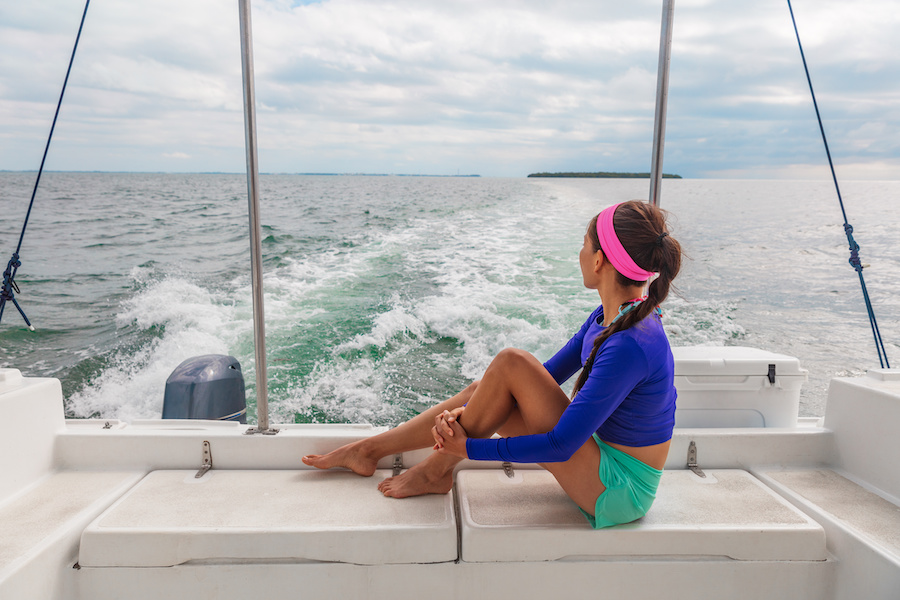
Several operators offer boat excursions specifically dedicated to dolphin watching. Prices vary depending on duration and included services:
Standard boat excursion (3 to 4 hours): Between €50 and €70 per adult, usually with a snack included. Private small-group outing: From €100 to €150 per person, for a more exclusive experience. Combined excursion with snorkeling: Some tours include a swimming or diving stop at Anse Dufour or Diamond Rock, for around €70 to €90.
Departures mainly take place from Fort-de-France, Les Trois-Îlets, Le Carbet, or Case-Pilote.
Can you swim with dolphins in Martinique?
Unlike in some other destinations, it is forbidden to swim with wild dolphins in Martinique. This regulation is in place to protect these mammals and prevent stress or disturbance to their natural habitat.
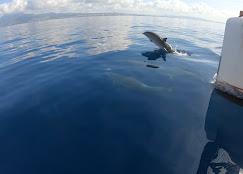
However, during boat trips, dolphins sometimes spontaneously come to play around the boat, swimming alongside the bow and performing spins. Observing these natural interactions is often far more impressive than forced swimming in an artificial setting.
What do dolphins eat?
Dolphins are skilled hunters and mainly feed on fish and squid. Their hunting techniques are fascinating:
They use echolocation, a natural sonar system, to locate their prey.
They sometimes hunt in groups, surrounding schools of fish to catch them more easily.
Some even use elaborate strategies, such as slapping the water’s surface with their tails to disorient their prey.
An adult dolphin can consume up to 15 kg of fish per day!
How do they reproduce?
Dolphins have complex social lives and often form strong bonds within their groups. When a female is ready to mate, she may attract several males, but she chooses her partner.
After a gestation period of about 12 months, the female gives birth to a single calf, which she nurses for nearly a year. The bond between mother and baby is very strong: she accompanies it during its first movements, helps it breathe by pushing it to the surface, and gradually teaches it how to hunt.
Dolphins are very playful animals, and the young spend much of their time having fun, especially by jumping out of the water or playing with floating objects.
Responsible tourism to protect dolphins
While dolphin watching in Martinique is a magical activity, it must be done with respect for these animals. Certain behaviors can disturb them or disrupt their ecosystem, which is why it’s important to choose ethical excursions.
Here are some recommendations for a responsible outing:
Never feed them: This can disrupt their diet and make them dependent on humans. Keep a respectful distance: Boats should slow down and avoid surrounding them. Limit noise: Loud engines can interfere with their communication and echolocation. Avoid littering at sea: Even a small piece of plastic thrown into the water can be ingested by a dolphin or pollute its habitat.
Several organizations, such as Megaptera or Evasion Tropicale, work to protect cetaceans in Martinique by raising awareness and supervising sea excursions.
Watching dolphins in the wild is an unforgettable experience. Seeing them play in the waves, leap out of the water, or glide beneath the surface reminds us just how fascinating and intelligent these animals are—and encourages us to protect their world so that future generations can enjoy these magical moments too.



 Half-day: 8:00 AM – 12:00 PM